Contents
Overview
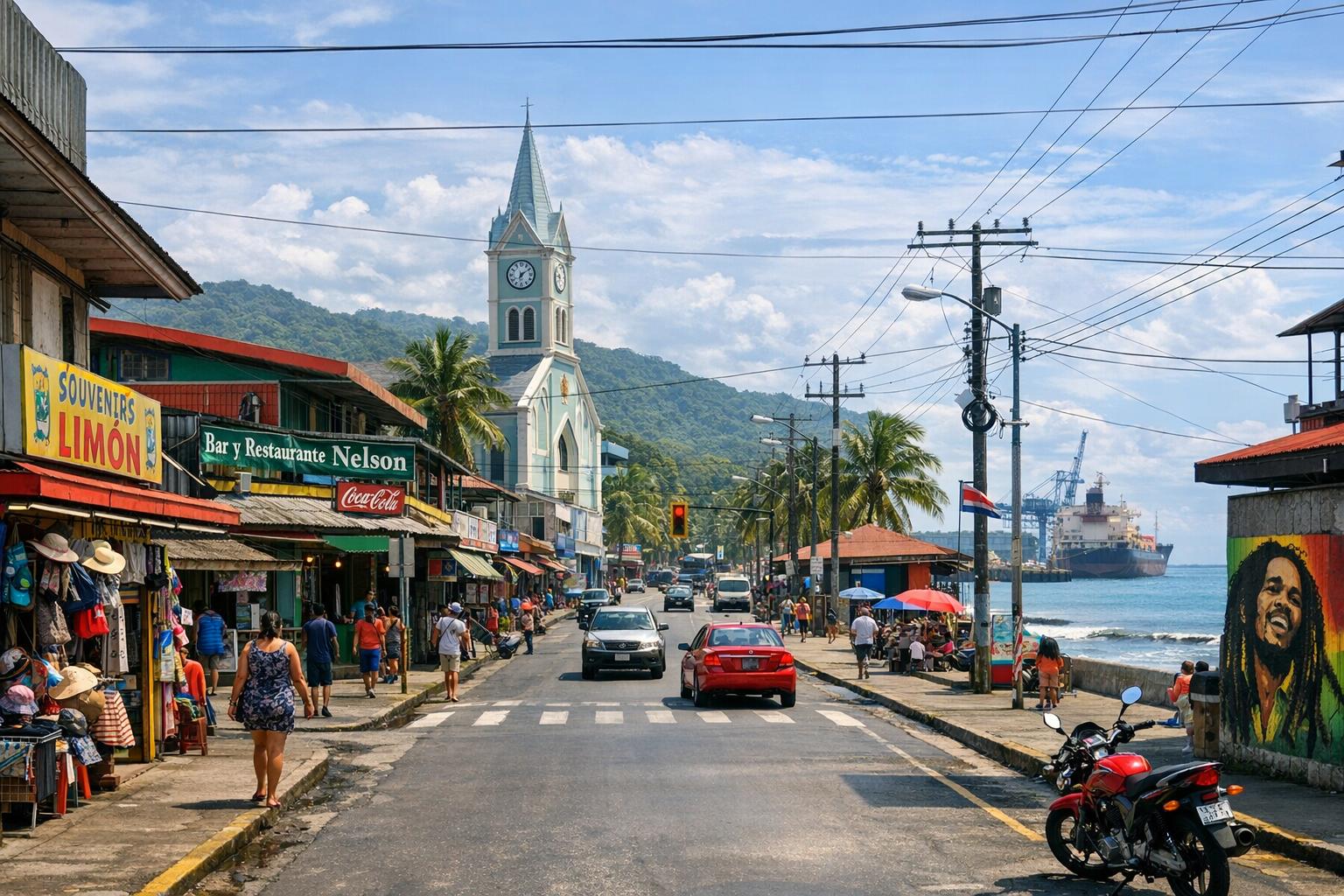
Located on the eastern coast of Costa Rica, Limón is a vibrant town known for its rich cultural heritage and biodiversity. As the capital of Limón Province, it serves as a significant port city on the Caribbean Sea, playing an essential role in Costa Rica’s trade and commerce. Its geographic position has made it a gateway for both goods and cultural exchange, linking the country to international markets and influences from across the Caribbean basin.
The city’s identity is closely tied to the sea. Container ships and cruise vessels regularly pass through its harbor, while nearby coastal communities rely on fishing and small-scale maritime trade. Limón also functions as an administrative and economic hub for the wider province, coordinating transportation, logistics, and regional development. Despite its relatively modest size, the city has a national importance that extends beyond its population, largely due to the strategic value of its port infrastructure.
History
Limón’s historical development reflects a convergence of cultures and economic priorities. Before European contact, the region was inhabited by indigenous groups who relied on fishing, agriculture, and trade networks that extended across Central America. Spanish colonization had only limited influence on the Caribbean coast compared to the Pacific side of Costa Rica, leaving much of the region relatively isolated for centuries.
The modern city of Limón began to take shape in the 19th century, particularly during the construction of the railroad linking the Caribbean coast to the Central Valley. This project, led by foreign investors, required a substantial labor force, which was largely composed of Afro-Caribbean workers from Jamaica and other islands. Their arrival fundamentally shaped the cultural and demographic character of the city.
By the late 1800s and early 1900s, Limón had become central to Costa Rica’s agricultural export economy. Bananas, in particular, transformed the region, with multinational companies investing heavily in plantations and port facilities. Coffee exports also passed through Limón, strengthening its role as a commercial hub. Over time, the blending of indigenous traditions, Afro-Caribbean heritage, and influences from Europe and Asia created a distinct local identity that remains visible today in language, cuisine, and architecture.
Economy
The economy of Limón remains closely tied to its port, which continues to be one of the busiest and most important in Costa Rica. The port handles a large share of the country’s exports, including bananas, pineapples, coffee, and other agricultural products. Modernization efforts in recent decades have improved container handling and logistics, allowing Limón to remain competitive in global trade.
In addition to shipping, tourism has become an increasingly significant component of the local economy. Visitors are drawn to the region’s beaches, wildlife reserves, and cultural experiences. Cruise tourism in particular has brought thousands of visitors to the city each year, contributing to local businesses such as restaurants, tour operators, and artisan markets.
Agriculture and fishing continue to support many families in the region. Small-scale farmers produce cacao, coconut products, and tropical fruits, while coastal communities engage in both commercial and subsistence fishing. Economic challenges persist, including infrastructure limitations and periodic fluctuations in global commodity prices, but ongoing investments in port facilities and tourism infrastructure aim to diversify and stabilize the local economy.
Geography and Climate
Limón is situated along Costa Rica’s Caribbean coastline, where lowland tropical terrain meets the sea. The surrounding landscape is characterized by dense rainforests, river systems, and wetlands that support a wide range of plant and animal species. This geographic setting contributes to the region’s reputation as one of the most biologically diverse areas in the country.
The climate is tropical and humid, with relatively stable temperatures throughout the year, typically ranging between 24°C and 30°C. Rainfall is abundant, with no clearly defined dry season, although precipitation tends to intensify between May and November. The constant humidity supports lush vegetation but also presents challenges related to infrastructure maintenance and urban planning.
Limón is also influenced by its tectonic setting. Costa Rica lies along the boundary between the Caribbean Plate and the Cocos Plate, making the broader region seismically active. While Limón itself does not experience earthquakes as frequently as some Pacific क्षेत्रों, it has been affected by notable seismic events.
One of the most significant earthquakes in the region occurred in 1991, known as the Limón Earthquake. Measuring 7.7 in magnitude, it caused extensive damage to infrastructure, including roads, bridges, and port facilities. Coastal uplift altered parts of the shoreline, affecting ecosystems such as coral reefs and mangroves. The earthquake also disrupted economic activity for an extended period, highlighting the vulnerability of coastal infrastructure to seismic events. Since then, improvements in building standards and emergency preparedness have been implemented to reduce future risks.
Ecotourism and Attractions
Limón serves as a gateway to some of Costa Rica’s most important ecological destinations. Visitors can explore protected areas that preserve tropical rainforests, wetlands, and coastal habitats. Among these, Tortuguero National Park is one of the most renowned, attracting researchers and tourists interested in sea turtle conservation. The park’s network of canals and lagoons provides opportunities for guided boat tours, offering close observation of wildlife in its natural environment.
Other attractions in the region include Cahuita National Park, known for its coral reefs and accessible hiking trails, and the Gandoca-Manzanillo Wildlife Refuge, which protects coastal ecosystems and endangered species. These areas support a variety of wildlife, including sloths, howler monkeys, jaguars, and numerous bird species. The combination of marine and terrestrial biodiversity makes Limón a focal point for ecotourism initiatives.
Local communities have increasingly participated in sustainable tourism practices, offering guided tours, cultural experiences, and environmentally responsible accommodations. These efforts aim to balance economic development with conservation, ensuring that natural resources remain protected for future generations. More information about visiting protected areas can be found through official tourism resources such as Costa Rica Tourism Board.
Transportation and Accessibility
Limón is connected to the rest of Costa Rica through a combination of road, air, and maritime infrastructure. A major highway links the city to San José, crossing mountainous terrain and providing a critical route for both passengers and cargo. Improvements to this corridor have reduced travel times and enhanced reliability, although weather conditions can still impact accessibility.
The Limón International Airport supports domestic and limited international flights, primarily serving regional travel needs. Most international visitors arrive via Juan Santamaría International Airport near San José and continue to Limón by road or domestic flight. The port itself is a central transportation hub, accommodating cargo vessels and cruise ships.
Public transportation options, including buses and taxis, facilitate movement within the city and surrounding مناطق. Ongoing infrastructure projects aim to further integrate Limón into national and regional logistics networks, reinforcing its role as a key economic center.
Cultural Significance
Limón’s cultural identity reflects its Afro-Caribbean heritage, which is evident in music, cuisine, language, and community traditions. English-based Creole is widely spoken alongside Spanish, and local dishes often feature coconut, spices, and seafood. Music styles such as calypso and reggae play an important role in social life and public celebrations.
One of the most prominent cultural events is the Carnaval de Limón, held annually in October. This festival commemorates historical events while showcasing the region’s artistic expression through parades, dance, and performances. The celebration attracts both locals and visitors, contributing to cultural preservation and tourism.
Religious and community gatherings also form an important part of daily life, reflecting a blend of traditions that have evolved over generations. Cultural institutions and local organizations work to promote this heritage, supporting education and artistic initiatives that highlight the unique identity of the region.
Conclusion
Limón’s blend of cultural diversity, economic significance, and natural resources positions it as a vital part of Costa Rica. Its port continues to drive national trade, while its surrounding landscapes support both biodiversity and tourism. Historical influences and ongoing development have shaped a city that serves as both a cultural center and a logistical hub.
At the same time, environmental and geological factors, including exposure to earthquakes and coastal conditions, present ongoing challenges. Efforts to improve infrastructure, promote sustainable tourism, and strengthen community resilience illustrate the dynamic nature of Limón’s development. For further details, consider consulting official tourism platforms such as regional travel information, which provide updated guidance for visitors and researchers alike.