Contents
Overview of Puerto Viejo
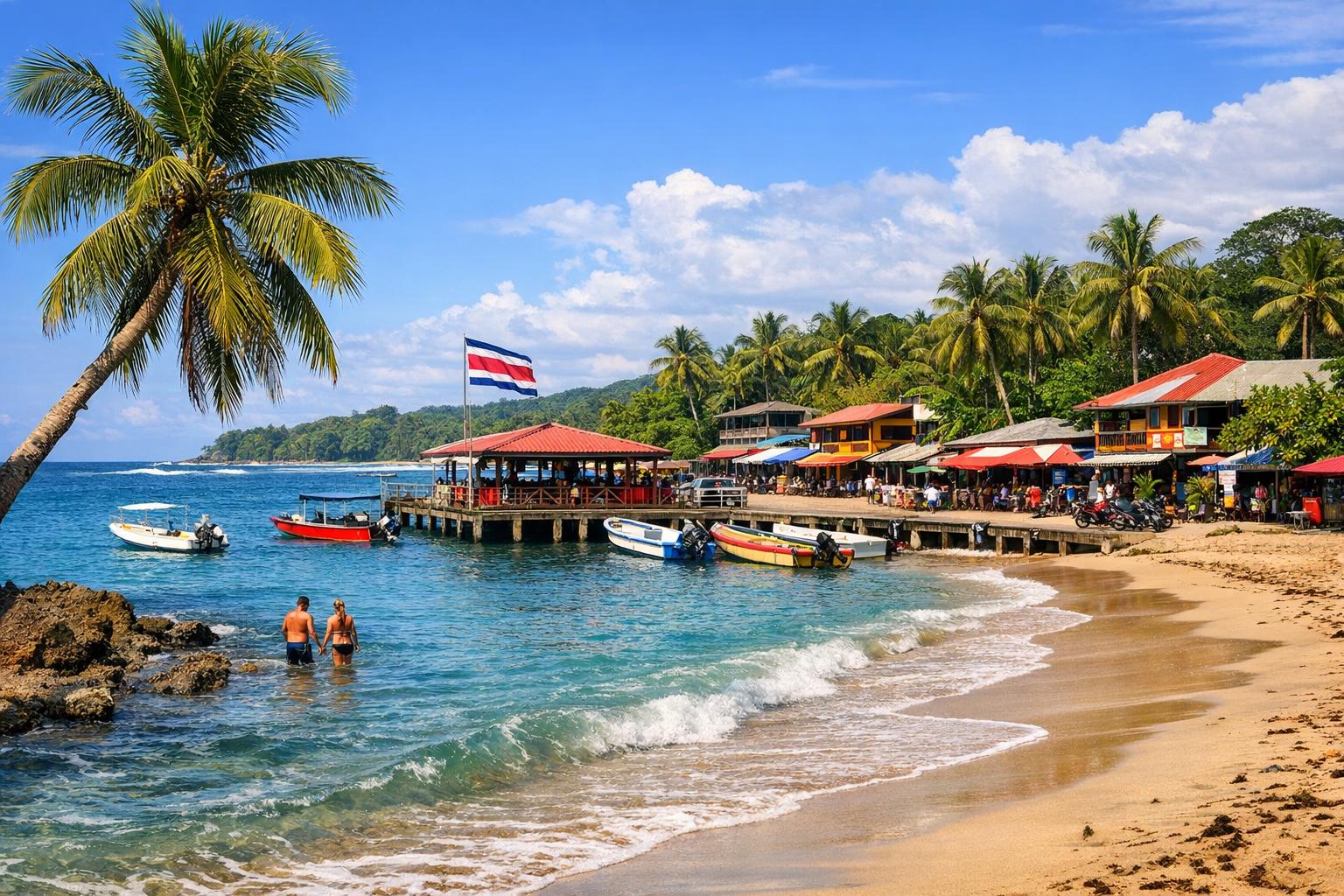
Puerto Viejo de Talamanca is a coastal town located along the Caribbean shoreline of Costa Rica, known for its combination of natural landscapes, cultural diversity, and tourism-oriented infrastructure. Although relatively small in scale, it has become one of the most recognized destinations on the country’s eastern coast. Its appeal lies in the interaction between tropical ecosystems, coastal geography, and a population shaped by historical migration and cultural exchange.
The town functions as both a residential community and a visitor hub, supporting a steady flow of international and domestic tourism. Over time, development has remained moderate compared to more urbanized coastal centers, which has allowed Puerto Viejo to retain much of its ecological and cultural character.
Geographical Setting
Puerto Viejo is situated in the province of Limón, near the southeastern border of Costa Rica along the Caribbean Sea. The region sits within the Talamanca area, a zone characterized by tropical rainforest climates, high humidity levels, and significant annual rainfall. These environmental factors contribute to dense vegetation and a wide variety of ecosystems, ranging from coastal mangroves to inland forests.
Its coastal geography includes stretches of sandy beaches, rocky outcrops, and coral reef systems. Beaches such as Playa Cocles and Playa Chiquita are shaped by both wave action and sediment patterns unique to the Caribbean coast. Inland, the terrain gradually rises toward the Talamanca mountain range, one of the most biodiverse regions in Central America.
The climate remains warm throughout the year, with average temperatures typically ranging between 25°C and 30°C. Rainfall is more evenly distributed compared to the Pacific coast, although there are relatively drier periods in September and October, which often attract higher tourist numbers.
Seismic Activity and Earthquake Impact
Costa Rica lies within a tectonically active region due to the interaction of the Caribbean Plate and the Cocos Plate. This geological setting makes earthquakes a recurring natural phenomenon across the country, including in the Caribbean region where Puerto Viejo is located.
While Puerto Viejo itself has not historically experienced the most destructive seismic events in Costa Rica, it has felt the effects of major regional earthquakes. One of the most significant events in recent history was the 1991 Limón earthquake, which registered a magnitude of approximately 7.7. The epicenter was located near the Caribbean coast, and the impact extended across much of the Limón Province.
In Puerto Viejo and surrounding areas, the earthquake caused ground deformation, soil liquefaction, and damage to infrastructure. Roads were disrupted, and some coastal areas experienced uplift, altering portions of the shoreline. Coral reefs were also affected, as sudden geological changes impacted marine ecosystems.
Since that event, building practices in the region have gradually adapted to incorporate seismic considerations, although enforcement and consistency can vary depending on the type of construction. Many newer buildings, particularly in the tourism sector, are designed with greater structural flexibility to withstand seismic movement.
The region continues to experience low to moderate seismic activity, but major earthquakes remain infrequent. Local awareness of earthquake preparedness exists, especially among long-term residents and businesses that rely on resilient infrastructure to maintain tourism.
For updated geological information, resources such as the Red Sismológica Nacional de Costa Rica provide real-time data and analysis of seismic activity across the country.
Cultural Significance
Puerto Viejo is widely recognized for its Afro-Caribbean cultural identity, which distinguishes it from many other parts of Costa Rica. This cultural influence dates back to the late 19th and early 20th centuries, when workers from Jamaica and other Caribbean islands migrated to the region to work on railroad construction and banana plantations.
The legacy of these communities is evident in language, traditions, and daily life. English-based Creole is commonly spoken alongside Spanish, and this bilingual environment contributes to a distinct cultural atmosphere. Local customs often reflect Caribbean heritage, particularly in cuisine and music.
Food plays a central role in cultural expression. Traditional dishes frequently incorporate coconut milk, spices, and locally sourced ingredients. Meals such as rice and beans prepared with coconut milk differ from similar dishes in other parts of Costa Rica. Seafood is also widely featured, reflecting the town’s coastal location.
Music remains an important element of public and social life. Genres such as reggae and calypso are commonly heard in restaurants and public spaces, reinforcing cultural continuity. Community events and informal gatherings often include live performances, creating a dynamic and participatory environment.
Local Economy
The economy of Puerto Viejo is largely centered on tourism, which has expanded steadily over the past decades. Visitors are drawn to the area for its beaches, biodiversity, and relatively relaxed pace compared to more urban destinations. As a result, many local businesses cater directly to travelers, including restaurants, tour operations, accommodations, and transportation services.
Tourism activities include surfing, snorkeling, wildlife observation, and guided excursions through protected areas. Surfing is particularly popular at Playa Cocles, where wave conditions attract both beginners and experienced surfers. Snorkeling and diving opportunities exist along coral reef areas, although reef health can vary due to environmental pressures.
Agriculture also plays a supporting role in the local economy. The surrounding region produces cacao, bananas, and plantains, with some farms participating in small-scale or organic production. In recent years, cacao farming has been linked to cultural tourism, with visitors participating in educational tours that explain traditional harvesting and chocolate-making processes.
Small-scale commerce, including artisan goods and local markets, contributes to economic diversity. However, reliance on tourism makes the local economy sensitive to global travel trends and environmental conditions.
Attractions and Activities
Puerto Viejo serves as a gateway to several protected natural areas. One of the most prominent is Cahuita National Park, located north of the town. The park features a combination of coastal forest and coral reef ecosystems. Visitors can explore hiking trails that run parallel to the coastline, offering opportunities to observe wildlife such as monkeys, sloths, and tropical birds.
Marine areas within Cahuita are known for their coral formations, although these ecosystems have experienced stress from climate change and sedimentation. Guided snorkeling tours remain a common activity, providing structured access while minimizing environmental impact.
Another important destination is the Gandoca-Manzanillo National Wildlife Refuge, located south of Puerto Viejo near the Panamanian border. This refuge is less developed and offers a more remote experience. It includes wetlands, mangroves, and coastal forest habitats that support a wide range of species, including manatees, sea turtles, and migratory birds.
Beaches throughout the area serve different purposes. Some are better suited for swimming, while others attract surfers due to stronger wave conditions. Black sand and golden sand beaches coexist, reflecting variations in geological composition.
Cycling is a common way to explore the region, as the coastal road connects several beaches and small communities. This allows visitors to move gradually through different environments while maintaining a low environmental impact.
Transportation and Accessibility
Despite its relatively remote location, Puerto Viejo is accessible through multiple transportation options. The most common route begins in San José, Costa Rica’s capital, from which travelers can take buses, private shuttles, or rental vehicles.
Public buses provide an economical option and operate daily routes to the Caribbean coast. Travel time typically ranges between four and five hours, depending on road conditions and traffic. Shuttle services offer a more direct and comfortable alternative, often including door-to-door transport.
Air travel is available via Limón International Airport, located approximately 50 kilometers away. From there, ground transportation completes the journey to Puerto Viejo. While flights reduce travel time, availability can vary.
Road infrastructure in the region has improved over time, but conditions may still be affected by heavy rainfall or natural events, including minor seismic activity. Travelers often account for variability in travel times when planning their journeys.
Accommodations
Puerto Viejo provides a wide spectrum of accommodations designed to accommodate diverse preferences and budgets. Options range from high-end beachfront resorts to small guesthouses and hostels. Many properties are integrated into the natural environment, using open-air designs and locally sourced materials.
Eco-lodges are a notable segment of the accommodation sector. These establishments emphasize sustainability through practices such as renewable energy use, water conservation, and waste reduction. Some also participate in conservation projects or collaborate with local communities.
Mid-range hotels often balance comfort with accessibility, providing amenities such as air conditioning, internet access, and proximity to beaches or town centers. Budget travelers can find hostels and shared accommodations that cater to shorter stays or backpacking routes.
The growth of tourism has increased demand for lodging, but development regulations aim to limit large-scale construction in order to preserve the natural landscape.
Environmental Initiatives
Environmental conservation is a central concern in Puerto Viejo, given its ecological significance and reliance on nature-based tourism. Local initiatives focus on protecting both terrestrial and marine ecosystems. Efforts include beach clean-up programs, wildlife rehabilitation centers, and educational campaigns aimed at visitors and residents.
Marine conservation projects often address coral reef health and sea turtle protection. Certain beaches serve as nesting grounds for turtles, and seasonal monitoring programs are implemented to reduce disturbances and improve hatchling survival rates.
Sustainable tourism practices are encouraged through certification programs and community-based initiatives. Businesses that adopt environmentally responsible practices can receive recognition, which helps guide visitor choices.
Organizations and research groups also monitor biodiversity and environmental changes, contributing data that supports conservation planning. Additional information on conservation efforts in Costa Rica can be found through organizations such as SINAC (National System of Conservation Areas).
In summary, Puerto Viejo represents a combination of ecological diversity, cultural history, and evolving economic activity. Its exposure to natural forces such as earthquakes has influenced infrastructure and environmental awareness, while its cultural identity continues to shape everyday life. The town remains an example of how tourism, conservation, and local tradition can coexist within a changing regional context.