Contents
Overview
San Mateo is a distinctive community located on the island of Ambergris Caye, Belize. It lies in the northern section of San Pedro Town and forms an integral part of the island’s expanding urban footprint. Originally developing as an informal settlement, San Mateo has grown steadily over recent decades, shaped by internal migration and the economic pull of the tourism industry. Its position places it close to both the Caribbean coastline and the lagoon systems that define the island’s geography, creating a setting that is both advantageous and complex.
The area represents a contrast to the more tourism-facing parts of San Pedro. While the island is internationally recognized for its beaches, marine reserves, and proximity to the Belize Barrier Reef, San Mateo reflects the everyday realities of residential life for many of the island’s workers. This dual identity contributes to a broader understanding of Ambergris Caye as not only a tourist destination but also a living community with evolving needs.
Geographic and Environmental Context
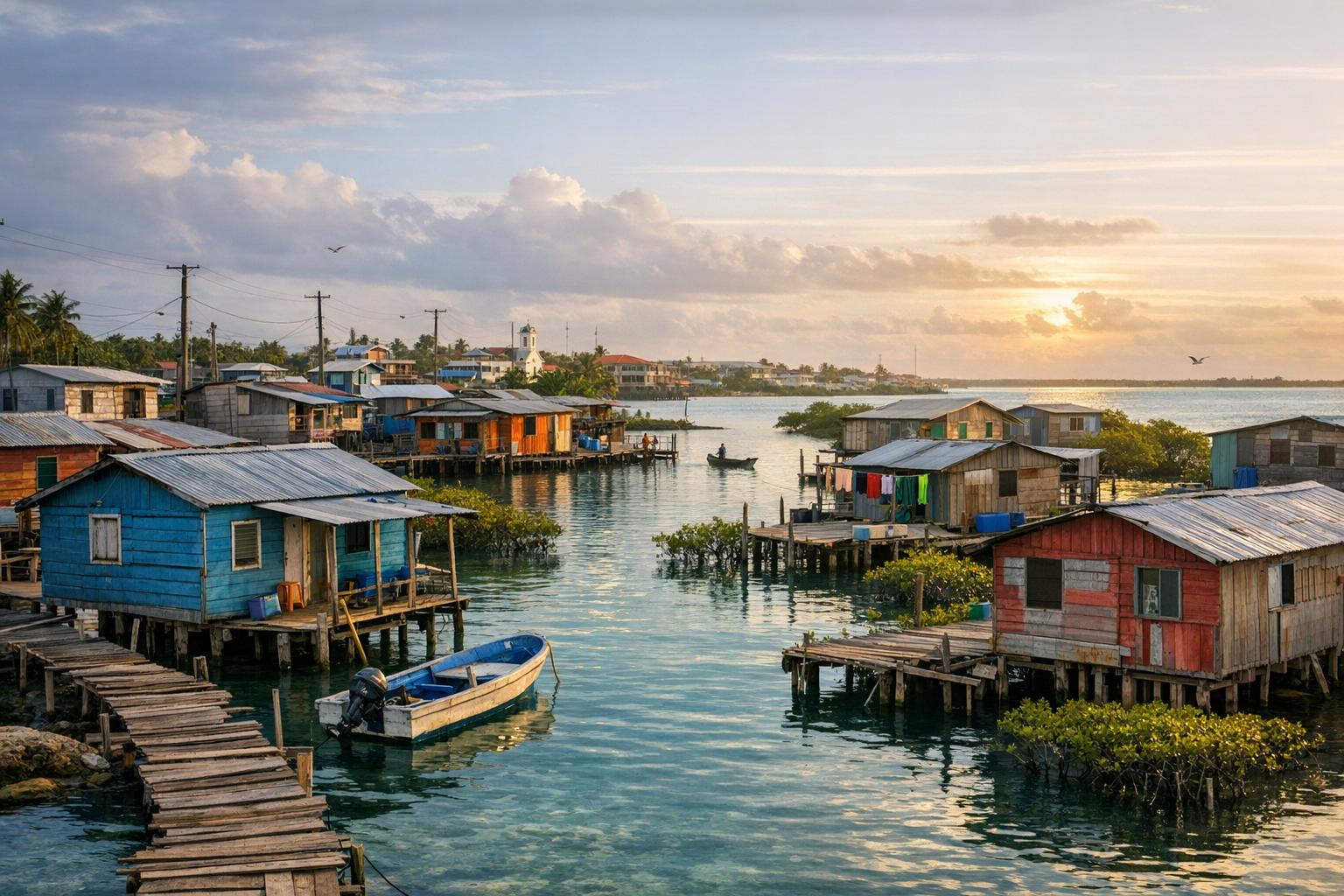
Ambergris Caye is the largest island in Belize, running parallel to the mainland and separated from it by a narrow channel. San Mateo is situated on the western, lagoon-facing side of San Pedro Town. Unlike the eastern shoreline, which benefits from more stable ground and direct beach access, the western side consists of lower-lying, marshy terrain. Historically, much of this area was characterized by mangroves and wetlands.
The environmental setting has significantly influenced settlement patterns. In San Mateo, development has often required land modification, including filling and elevating plots to make them suitable for housing. These alterations have had consequences for natural drainage patterns and have increased the area’s vulnerability to flooding during heavy rainfall or high tides.
The climate is tropical, with a pronounced wet season that brings intense rainfall and occasional tropical storms. Seasonal weather variability interacts with the area’s topography, making water management a persistent concern. Rising sea levels, a broader issue affecting coastal communities worldwide, are also relevant in San Mateo, where even minor increases in water levels can affect roads and housing.
Although Belize is not located directly on a major tectonic boundary, it is still influenced by regional geological activity associated with the Caribbean Plate. This means that earthquakes, while relatively infrequent, do occur and can be felt across the country, including on Ambergris Caye.
Earthquake Exposure and Impact
San Mateo and the wider Ambergris Caye area are considered low to moderate risk zones for seismic activity. Most earthquakes affecting Belize originate from tectonic movements in the Caribbean region or along fault systems in neighboring countries such as Guatemala. These seismic events are usually moderate in magnitude but can still be felt across the island.
Due to the island’s soft, water-saturated soils, even mild seismic tremors can produce noticeable ground movement. This is particularly relevant in San Mateo, where land reclamation and fill materials are common. Such ground conditions can amplify shaking, increasing the likelihood of minor structural effects even from distant earthquakes.
Historically, earthquakes have not caused widespread destruction on Ambergris Caye. However, residents have reported occasional tremors that lead to temporary disruptions, such as swaying structures or minor damage to poorly constructed buildings. These events have reinforced the importance of building practices that account for both soil conditions and regional seismic risks.
Infrastructure development efforts have increasingly taken environmental and geological factors into account. While earthquake-resistant construction is not as prominent a concern as in high-risk regions, there is a growing awareness of the need for improved building standards. This is particularly important in areas like San Mateo, where informal or rapidly constructed housing may lack structural reinforcement.
Challenges and Infrastructure
San Mateo has long faced infrastructural challenges tied to its rapid growth and environmental conditions. One of the primary issues has been the absence of fully developed road networks. In earlier stages of development, many streets were unpaved and susceptible to flooding, making transportation difficult, especially during the rainy season.
Drainage has been another persistent concern. The natural wetland environment, combined with land filling practices, has created areas where water accumulates easily. Without adequate drainage systems, standing water can remain for extended periods, affecting both mobility and public health.
Access to utilities such as clean water, sewage systems, and electricity has gradually improved, but disparities remain. Some parts of San Mateo have historically relied on alternative or informal solutions for basic services. Over time, cooperation between local authorities, community groups, and external partners has led to incremental progress.
The combination of environmental vulnerability and infrastructural limitations also interacts with external hazards. Heavy rains, tropical storms, and even minor seismic activity can place additional strain on already delicate systems, highlighting the need for resilient planning.
Efforts Towards Improvement
Ongoing development initiatives in San Mateo reflect a combination of grassroots organization and external support. Community members have played a central role in advocating for better infrastructure, often working alongside non-governmental organizations and volunteer groups.
Projects have included raising and stabilizing roadways, installing drainage channels, and improving housing conditions. These efforts frequently emphasize practical, scalable solutions that can be adapted to the local environment. In some cases, recycled materials and locally sourced resources are used to enhance sustainability.
International partnerships have also contributed to progress. Organizations focusing on community development have supported projects aimed at improving sanitation, constructing safer homes, and providing technical expertise. More information about such initiatives can be found through platforms like GlobalGiving and Habitat for Humanity.
The cumulative impact of these efforts is gradual but meaningful. Improvements in infrastructure not only enhance quality of life but also reduce vulnerability to environmental risks, including flooding and the indirect effects of seismic activity.
Community and Culture
San Mateo reflects the broader cultural diversity of Belize, a country known for its multicultural population. Residents include individuals of Mestizo, Creole, Garifuna, and other backgrounds, as well as immigrants from neighboring Central American countries. This diversity contributes to a dynamic social environment where multiple languages, traditions, and customs coexist.
Daily life in San Mateo is shaped by strong community ties. Social interactions often extend beyond individual households, with neighbors playing an active role in mutual support. Cultural expressions can be seen in local celebrations, religious practices, and informal gatherings.
Despite economic and infrastructural challenges, the community maintains a sense of identity that is closely connected to both the island and the wider national culture. This connection is reinforced through shared experiences and collective efforts to address local issues.
Local Economy and Employment
The economy of San Mateo is closely linked to tourism, which is the primary driver of Ambergris Caye’s growth. San Pedro Town attracts visitors for activities such as diving, snorkeling, and fishing, particularly around the Belize Barrier Reef, a UNESCO World Heritage Site. More information about Belize’s tourism sector can be explored through Travel Belize.
Many residents of San Mateo work in roles that support the tourism industry. These include positions in hotels, restaurants, tour operations, and transportation services. Others are involved in construction, retail, or small-scale entrepreneurship, catering both to locals and visitors.
Employment opportunities, while present, can be influenced by seasonal fluctuations in tourism. This variability can affect income stability, making diversification of economic activities an ongoing consideration for community development. Informal economic activities also play a role, providing additional sources of income for households.
Education is a central component of development efforts in San Mateo. Schools in and around the community serve as important hubs for learning and social interaction. Access to education has improved over time, although challenges remain in terms of resources, infrastructure, and capacity.
Local schools often collaborate with external partners to enhance educational programs. These collaborations may include the provision of school supplies, teacher training, and the development of extracurricular activities. Education is viewed not only as a pathway to individual advancement but also as a means of strengthening the community as a whole.
A range of social programs operate in San Mateo, addressing areas such as health, housing, and skill development. Health initiatives may include mobile clinics, vaccination campaigns, and educational outreach focused on preventive care. These programs are particularly important in areas where access to healthcare facilities may be limited.
Skill development workshops provide residents with opportunities to learn trades or improve existing competencies. These initiatives can support employment and entrepreneurship, contributing to economic resilience. Youth-focused programs aim to create safe and constructive environments, reducing exposure to social risks.
Organizations working in the area often adopt a community-based approach, involving residents in planning and implementation. This helps ensure that programs are relevant to local needs and sustainable over time.
Future Prospects
San Mateo continues to evolve as part of the broader growth of Ambergris Caye. Future development will likely focus on balancing expansion with environmental management. Addressing issues such as drainage, housing quality, and access to services remains essential.
Consideration of natural hazards, including flooding, storms, and occasional seismic activity, is becoming increasingly integrated into planning efforts. While earthquakes are not the primary threat, their potential effects on soft ground conditions highlight the importance of resilient construction practices.
Sustained collaboration between local authorities, community members, and external partners will play a crucial role in shaping the area’s trajectory. Investments in infrastructure, education, and economic diversification can contribute to long-term stability.
San Mateo’s development reflects broader themes relevant to small island communities, including adaptation to environmental challenges and the integration of local and global influences. Continued attention to these factors will influence how the community navigates future opportunities and constraints.