Contents
Introduction to Santa Cruz, Belize
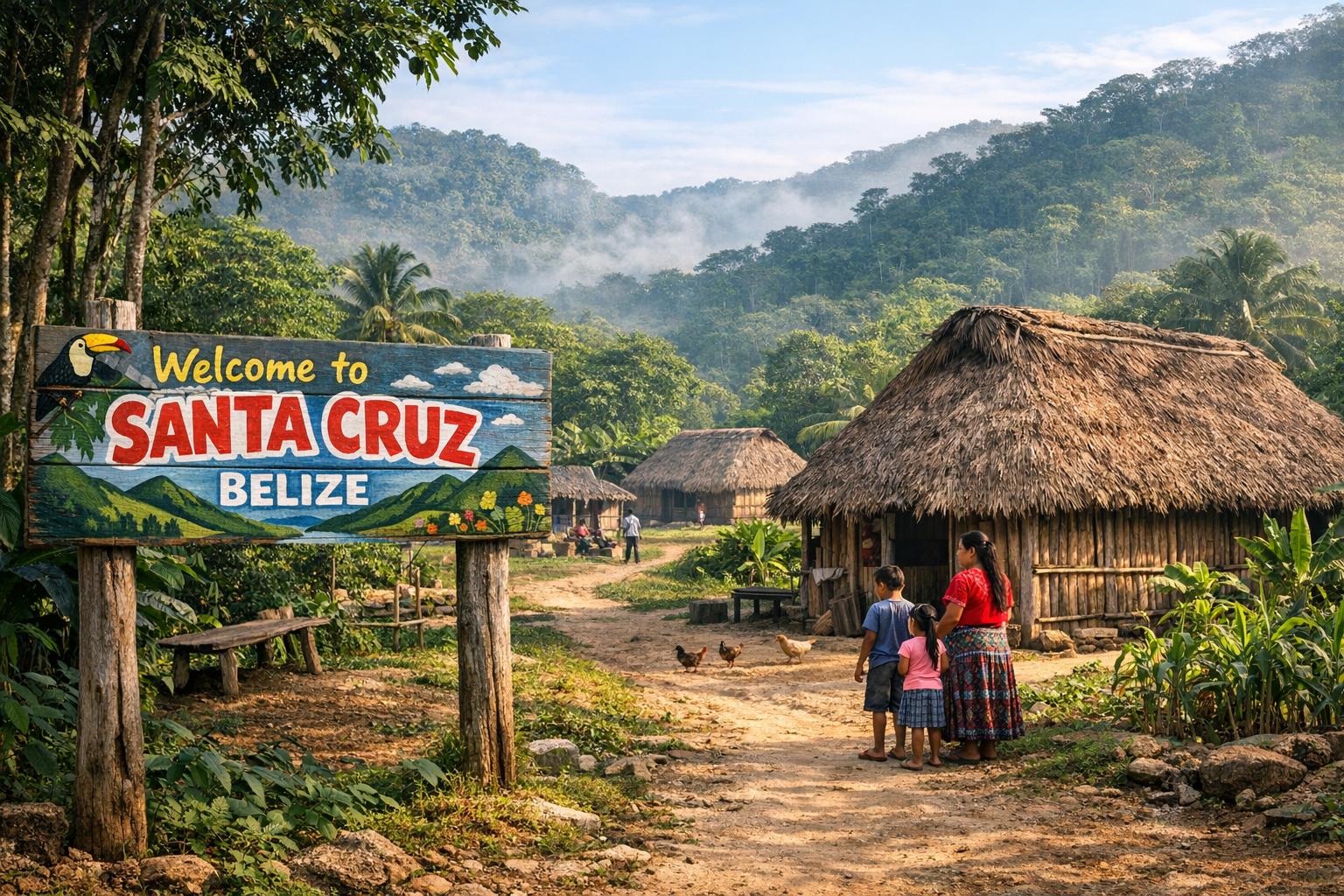
Santa Cruz is a small village located in the Toledo District of southern Belize, a region known for its dense forests, diverse ecosystems, and strong representation of indigenous cultures. The village is predominantly inhabited by people of Maya descent, particularly the Mopan Maya, and it serves as an example of how traditional lifeways continue alongside gradual modernization. Santa Cruz is not a large or highly commercialized destination; instead, it offers a setting where daily life reflects long-standing cultural practices, communal values, and a close relationship with the surrounding natural environment.
Life in Santa Cruz centers on agriculture, family networks, and cultural continuity. Unlike urban centers in Belize such as Belize City or even Punta Gorda, Santa Cruz retains a slower pace of life. Visitors who arrive in the village often notice the emphasis on subsistence farming, hand-built homes, and community cooperation, all of which contribute to a distinct social structure that differs from more industrialized areas.
Location and Accessibility
Santa Cruz is situated approximately 21 kilometers northwest of Punta Gorda, the administrative and commercial hub of Toledo District. The journey to Santa Cruz typically begins in Punta Gorda, where travelers can access transportation networks that connect smaller villages throughout the region. Roads leading to Santa Cruz are mostly unpaved and can vary in condition depending on the season, particularly during the rainy months when travel may become slower or more difficult.
Local buses operate along main routes, though schedules may be limited. Many travelers opt for private transportation or guided tours arranged through regional operators. These travel arrangements can often be coordinated through services listed by the Belize Tourism Board, which provides updated information about transportation and regional access.
The relative remoteness of Santa Cruz has contributed to the preservation of its cultural identity, as the village has not experienced the same degree of outside influence or infrastructure development seen in more accessible locations.
Cultural Heritage
Santa Cruz is widely recognized for its strong retention of Maya traditions. The residents continue to practice forms of agriculture that have been used for generations, most notably the milpa system. This involves rotating plots of land to grow staple crops such as corn, beans, and squash, allowing the soil to recover its fertility naturally over time. While modern agricultural techniques have influenced some aspects of production, the foundational methods remain rooted in tradition.
Language also plays an important role in the community. Mopan Maya is still spoken alongside English and Spanish, particularly among older generations and within family settings. The continued use of indigenous language supports cultural continuity and reflects the community’s resistance to complete linguistic assimilation.
Spiritual beliefs and cultural ceremonies further reinforce identity. Traditional Maya ceremonies are sometimes performed to mark agricultural cycles, community events, or important transitions in life. These practices often involve ritual offerings and the guidance of spiritual leaders, sometimes referred to as shamans or village elders. While some residents also participate in Christian religious practices, these often coexist with older belief systems rather than replacing them entirely.
Tourism and Activities
Tourism in Santa Cruz is relatively low in volume but focused on cultural and ecological engagement. Visitors typically come to the area seeking a deeper understanding of Maya culture and the natural environment of southern Belize. Activities in and around Santa Cruz often emphasize immersion rather than observation.
One of the most significant nearby attractions is the Nim Li Punit archaeological reserve. This site, located a short distance from the village, contains a collection of carved stone monuments known as stelae, which provide insight into the political and ceremonial life of ancient Maya societies. The site is managed by the Belize Institute of Archaeology, and further information can be found through NICH Belize.
In addition to visiting archaeological sites, tourists may participate in guided walks through forested areas, learning about medicinal plants, local wildlife, and traditional land-use practices. The biodiversity of the Toledo District includes a wide range of bird species, insects, and plant life, making it an area of interest for ecological research and sustainable tourism.
Community-Based Tourism Initiatives
Efforts to develop tourism in Santa Cruz have largely centered on community-based models. These initiatives are designed to ensure that economic benefits remain within the village while also safeguarding cultural practices and environmental resources. Organizations working in the region often collaborate with local leaders to establish guidelines that prevent overdevelopment or cultural exploitation.
Community-run programs may include homestay opportunities, where visitors live with local families and experience daily routines firsthand. This arrangement allows for a more direct exchange of knowledge and perspectives, while also providing income for participating households. Craft workshops are another common feature, where artisans demonstrate techniques such as weaving, pottery, or traditional food preparation.
Regional groups such as the Toledo Tour Guide Association play a role in promoting responsible tourism and connecting visitors with trained local guides. These guides often have extensive knowledge of both the cultural and natural features of the region, contributing to a more informed visitor experience.
Environmental Context and Natural Hazards
Santa Cruz is located in a region that is primarily influenced by tropical weather systems rather than geological instability. Belize, as a whole, is not situated on a major tectonic plate boundary, which means that significant earthquake activity is relatively rare compared to countries in more seismically active zones such as Central America’s Pacific coast.
However, minor seismic events have been recorded in Belize and surrounding regions. These are typically low in magnitude and rarely cause structural damage. Santa Cruz itself has not been the site of any major destructive earthquakes in recorded history. Nonetheless, occasional tremors originating from neighboring countries such as Guatemala or Honduras may be felt lightly in southern Belize.
More prominent environmental challenges in Santa Cruz come from weather-related hazards. The Toledo District is susceptible to heavy rainfall, flooding, and tropical storms, particularly during the Atlantic hurricane season. These events can affect road accessibility, agricultural production, and housing conditions. While earthquakes remain a minimal threat, the community places greater emphasis on managing climate-related risks.
In recent years, regional planning initiatives have encouraged improved building techniques and disaster preparedness, even in areas where earthquake risk is low. This includes basic structural reinforcement and community awareness programs aimed at increasing resilience to a range of natural hazards.
Preservation and Challenges
Santa Cruz faces several challenges that are common among rural and indigenous communities. One of the primary concerns is balancing economic development with cultural preservation. As access to education, technology, and external markets increases, younger generations may seek opportunities outside the village, leading to gradual changes in social structure and tradition.
Infrastructure development is another area of focus. Limited road access, inconsistent utilities, and restricted healthcare services can impact quality of life. At the same time, improvements in these areas must be approached carefully to avoid disrupting the cultural and environmental balance that defines the community.
Organizations working within Belize often collaborate with villages like Santa Cruz to address these issues through sustainable development programs. These may include educational initiatives, agricultural support, and environmental conservation efforts. Partnerships with international groups and government agencies aim to strengthen local capacity while respecting cultural autonomy.
Conclusion
Santa Cruz, Belize, represents a continuation of Maya cultural traditions within a modern national context. Its geographic location, limited accessibility, and strong community structure have contributed to the preservation of practices that date back generations. While not significantly affected by earthquakes, the village remains attentive to broader environmental risks and ongoing development challenges.
The combination of cultural heritage, ecological surroundings, and community-driven tourism makes Santa Cruz a distinct destination within Belize. Visitors interested in learning more about travel opportunities or responsible tourism in the area can explore resources provided by the Belize Tourism Board and regional tour associations.