Contents
Geographical and Historical Overview
Ahuachapán is a city and municipality located in the western region of El Salvador, functioning as the administrative capital of the Ahuachapán Department. Positioned near the Guatemalan border, it occupies a strategic location that has historically facilitated trade, migration, and cultural exchange between neighboring regions. This proximity has contributed to a blending of traditions, languages, and economic practices that distinguish Ahuachapán from more centrally located Salvadoran cities.
The city sits within a geologically active zone shaped by volcanic processes that define much of El Salvador’s landscape. Its surroundings include rolling hills, fertile valleys, and geothermal features, all of which influence both its development and its risks. The region’s location along the Pacific Ring of Fire means that seismic activity has played a recurring role in shaping infrastructure planning and urban growth.
Historically, Ahuachapán has served as both a regional hub and a point of resilience. Its evolution reflects broader patterns in Salvadoran history, including colonization, agricultural expansion, and modernization. While maintaining its role as a departmental capital, the city continues to balance traditional economic sectors with emerging opportunities tied to tourism and small-scale industry.
Climate and Topography
The climate in Ahuachapán is classified as tropical, with two primary seasons: a rainy season typically extending from May through October, and a dry season from November to April. Average temperatures remain relatively stable throughout the year, though the elevation and surrounding hills can create localized variations in temperature and humidity. These conditions support year-round agricultural activity, particularly for crops that benefit from consistent warmth and seasonal rainfall.
The topography is defined by undulating terrain shaped by volcanic activity. Rich volcanic soils contribute to high agricultural productivity, particularly for coffee cultivation, which thrives in well-drained, mineral-rich environments. Nearby geothermal areas, such as those found in the broader Ahuachapán geothermal field, indicate subsurface volcanic heat that has both economic and geological significance.
Rivers and smaller waterways traverse the area, supporting irrigation and local ecosystems. These natural features, combined with the region’s elevation, create a landscape that is both productive and visually distinctive, attracting interest from agricultural investors and visitors alike.
Seismic Activity and Its Impact
Ahuachapán, like much of El Salvador, is situated in an area prone to earthquakes due to tectonic interactions along the boundaries of the Caribbean Plate. Over the decades, the city has experienced multiple seismic events of varying intensity. These earthquakes have periodically disrupted daily life, damaged infrastructure, and necessitated rebuilding efforts.
One of the most significant impacts of seismic activity has been on historical architecture. Colonial-era buildings, often constructed without modern reinforcement techniques, have sustained damage during earthquakes, prompting restoration initiatives that aim to preserve their cultural value while improving structural resilience. Churches and public buildings in particular have required repeated maintenance and retrofitting.
Seismic risks have also influenced urban planning. Building codes in Ahuachapán have gradually evolved to incorporate earthquake-resistant design principles. Newer constructions are more likely to include reinforced concrete frameworks and flexible materials intended to absorb seismic energy. Despite these improvements, older residential areas remain vulnerable, and earthquake preparedness continues to be a priority for local authorities.
In addition to structural damage, earthquakes can affect local economies by disrupting transportation routes and agricultural production. Landslides in hilly areas occasionally accompany seismic events, temporarily isolating rural communities. The city’s response has included investment in emergency preparedness systems, public awareness campaigns, and coordination with national disaster management agencies such as Protección Civil de El Salvador.
Historical Significance
The historical roots of Ahuachapán extend back to pre-Columbian times, when the area was inhabited by the Pipil people, an indigenous group with cultural and linguistic ties to the Nahua civilization of central Mexico. The name “Ahuachapán” itself is derived from Nahuatl, often interpreted as “place of oak trees” or “place where there are broad rivers.”
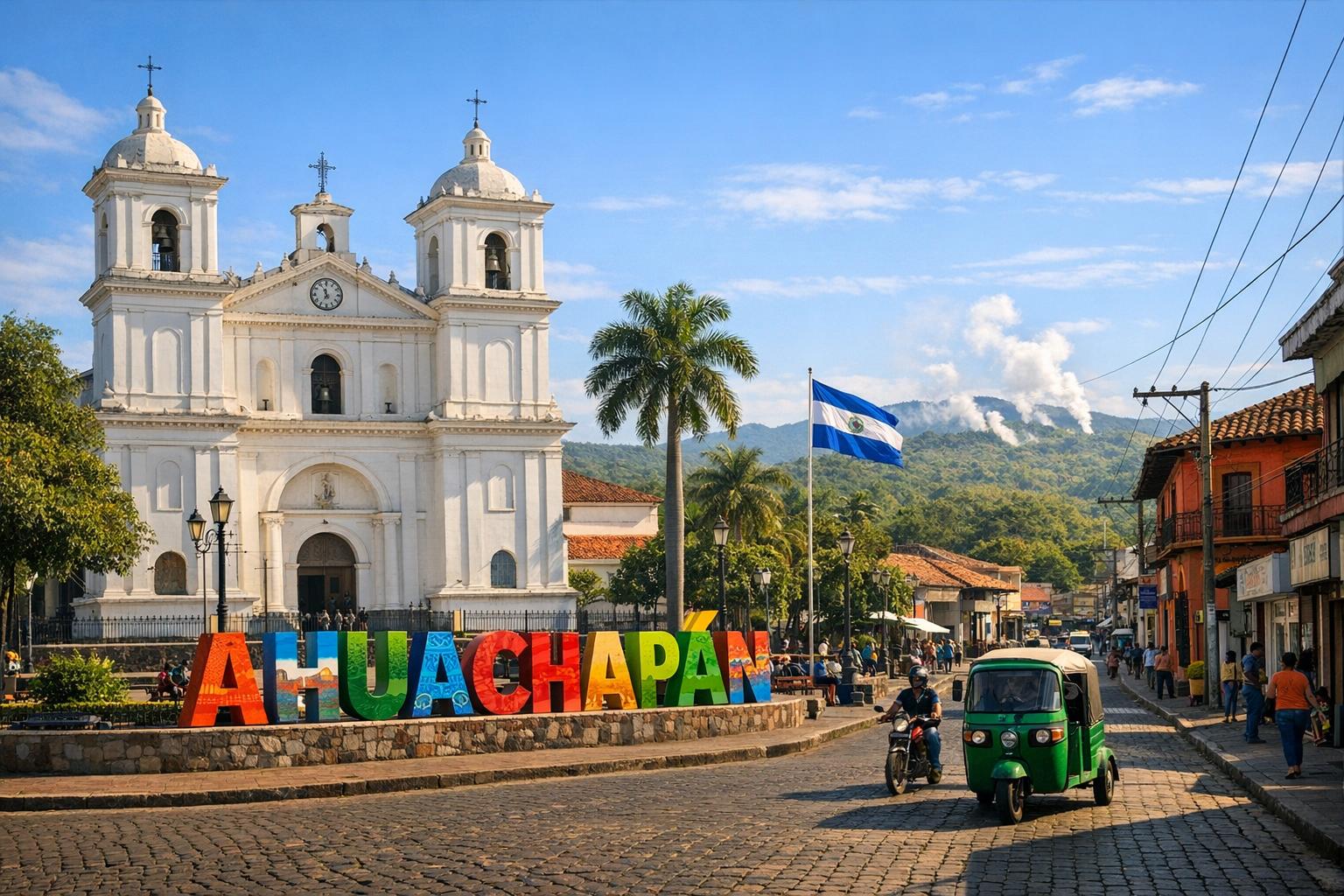
During the Spanish colonial period, Ahuachapán became an important settlement within the administrative framework of the Captaincy General of Guatemala. Colonial influence introduced new architectural styles, religious institutions, and agricultural practices. Churches built during this era remain central landmarks, reflecting both religious significance and historical continuity.
Following independence in the early 19th century, the city continued to develop as an agricultural center, particularly during the expansion of coffee cultivation. This period brought economic growth but also shifts in land ownership and labor structures that have had lasting social implications.
Today, Ahuachapán’s historical legacy is visible in its urban layout, public buildings, and ongoing cultural practices. Preservation efforts seek to balance modernization with the conservation of historically significant sites.
Economic Activities
Agriculture remains a central pillar of Ahuachapán’s economy. Coffee production is particularly prominent, benefiting from the region’s altitude, soil composition, and climate. Local coffee farms range from small family-operated plots to larger plantations, many of which participate in export markets. High-quality beans produced in the area contribute to El Salvador’s reputation in the global coffee industry.
In addition to coffee, farmers cultivate sugarcane, beans, corn, and a variety of fruits. These crops support both subsistence farming and commercial activities. Agricultural cycles are closely tied to seasonal rainfall, making water management a key factor in productivity.
Livestock farming also contributes to the local economy, though on a smaller scale compared to crop production. Dairy and poultry products are commonly distributed within regional markets, supporting local consumption and small-scale trade.
Commercial and Industrial Developments
Recent years have seen gradual diversification in Ahuachapán’s economic base. Commercial activity has expanded, with small businesses, retail establishments, and service providers contributing to employment opportunities. Markets serve as important centers for both economic exchange and social interaction, linking urban and rural communities.
Industrial development remains limited but is growing incrementally. Small-scale manufacturing, including food processing and handicraft production, provides alternative income sources. These industries often rely on locally sourced materials, which helps maintain economic circulation within the region.
Energy production represents a notable aspect of the local economy. The Ahuachapán geothermal plant, one of El Salvador’s oldest geothermal facilities, harnesses volcanic heat to generate electricity. This contributes to national energy supply and highlights the practical use of the region’s geological characteristics. More information about energy initiatives in the country can be found at Consejo Nacional de Energía.
Tourism Opportunities
Tourism has become an increasingly important sector, drawing visitors interested in natural landscapes, cultural heritage, and regional cuisine. Ahuachapán is part of the well-known “Ruta de las Flores,” a route that connects several towns celebrated for their scenic beauty, coffee farms, and artisan markets.
Natural attractions include hot springs, waterfalls, and forested areas that support hiking and outdoor activities. These sites benefit from geothermal activity, which creates unique recreational environments. Local businesses have developed lodging, guided tours, and dining services to accommodate visitors.
Cultural tourism is also significant. Festivals, religious events, and local traditions provide insight into the region’s heritage. Markets and artisan workshops allow visitors to engage directly with local craftspeople. Tourism development remains relatively small-scale, which has helped preserve the area’s character while providing economic opportunities.
Cultural Aspects
Ahuachapán maintains a cultural identity shaped by indigenous traditions, colonial history, and contemporary influences. Community life is structured around shared events, religious practices, and family networks. Public spaces such as plazas and markets serve as focal points for social interaction.
Festivals play a central role in cultural expression. The “Fiestas Patronales,” held in honor of the city’s patron saint, involve religious ceremonies, music, food, and public celebrations that attract both residents and visitors. These events reflect a combination of Catholic and indigenous elements, demonstrating the layered nature of local traditions.
Music and dance are integral components of these celebrations. Traditional forms coexist with more modern genres, reflecting broader cultural exchange. Educational institutions and community organizations often support cultural preservation through events and programs.
Local Cuisine
The culinary traditions of Ahuachapán reflect the agricultural products and cultural influences of the region. Staple foods include corn-based dishes such as pupusas, which are filled with ingredients like cheese, beans, or pork. Tamales, prepared with seasoned masa and wrapped in leaves, are also widely consumed.
Beverages such as atole and locally grown coffee are common. Coffee holds particular importance, not only as an export product but also as a daily staple. Preparation methods vary, with an emphasis on maintaining the flavor characteristics associated with locally grown beans.
Street vendors and small restaurants play a significant role in the local food economy, offering accessible options that reflect traditional recipes. Seasonal ingredients influence menus, linking cuisine closely to agricultural cycles.
Art and Handicrafts
Artistic production in Ahuachapán includes textiles, pottery, woodwork, and other handcrafted items. These products often incorporate traditional techniques and materials, preserving skills passed down through generations. Designs may feature patterns and motifs connected to indigenous heritage.
Craft markets provide a venue for artisans to sell their work directly to consumers. Tourism has contributed to increased demand for handmade goods, supporting local livelihoods. At the same time, artisans face challenges related to competition from mass-produced items and shifting consumer preferences.
Cultural initiatives aimed at supporting artisans include workshops, cooperatives, and promotional events. These efforts seek to maintain the relevance of traditional crafts while adapting to contemporary markets.
Infrastructure and Accessibility
Ahuachapán is connected to the rest of El Salvador through a network of roads that facilitate transportation of goods and people. The city can be reached from San Salvador and other major urban centers via national highways. Cross-border connectivity with Guatemala enhances its role as a regional transit point.
Public transportation options include buses and smaller vehicles that serve both urban and rural routes. While generally accessible, transportation infrastructure in some rural areas remains limited, affecting mobility and access to services.
Urban infrastructure has developed gradually, with ongoing investment in roads, utilities, and public spaces. Earthquake resilience has become an important consideration in infrastructure planning, influencing construction standards and maintenance practices.
The city provides essential services in healthcare, education, and public administration. Hospitals, clinics, and health centers address both routine and emergency needs, with additional support from national health programs. Access to healthcare can vary in more remote areas, where transportation limitations may affect service delivery.
Educational institutions include primary and secondary schools, as well as vocational training centers. These institutions support workforce development and contribute to local economic stability.
Efforts to improve quality of life include infrastructure upgrades, social programs, and disaster preparedness initiatives. Earthquake readiness remains a key focus, with public education campaigns and emergency response planning designed to reduce risk and improve resilience.
For more information about Ahuachapán and its offerings, you can explore the official tourism website.