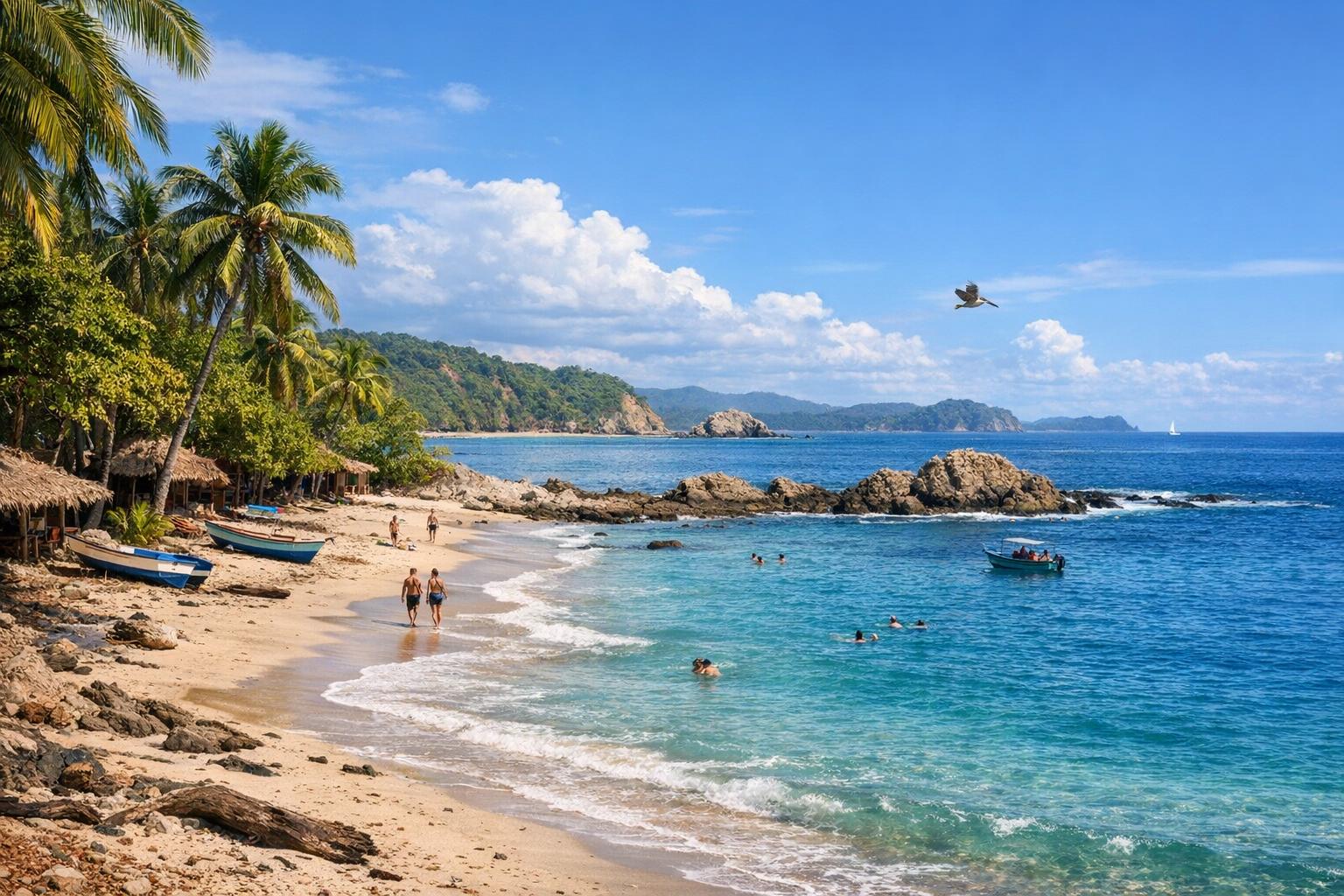
Overview of Nicoya
The Nicoya Peninsula is located in the northwestern region of Costa Rica, extending into the Pacific Ocean within the province of Guanacaste. This region represents one of the country’s most geographically and culturally distinct areas, characterized by its relative isolation from the Central Valley and its strong historical identity. The peninsula is bordered by the Gulf of Nicoya to the east and the open Pacific Ocean to the west, creating a varied coastal environment that supports both marine and terrestrial ecosystems.
Nicoya serves as both a geographic and cultural reference point. The town of Nicoya, situated inland, functions as a historical and administrative center, while coastal communities contribute to the region’s modern economic vitality through tourism and fisheries. The peninsula’s appeal lies not only in its natural scenery but also in its continuity of traditional lifestyles, which differ noticeably from the more urbanized parts of Costa Rica.
Geography and Climate
The Nicoya Peninsula exhibits a diverse landscape shaped by tectonic activity, coastal processes, and seasonal climate patterns. The terrain includes low mountain ranges, rolling hills, river valleys, and extensive beaches. These features create a mosaic of habitats that support a wide range of plant and animal species. The peninsula is separated from mainland Costa Rica by the Tempisque River basin and the Gulf of Nicoya, which historically contributed to its relative isolation.
The region experiences a tropical savanna climate, marked by a pronounced dry season from December to April and a rainy season from May to November. During the dry months, vegetation often appears brown and dormant, particularly in the dry tropical forests that dominate the area. With the onset of rains, the landscape undergoes rapid transformation, becoming green and biologically active.
Water availability plays a central role in both natural systems and human activity. Seasonal rivers and underground aquifers support agriculture and daily life, although drought conditions during extended dry periods can present challenges. Coastal zones also include mangroves and estuaries, which serve as critical breeding grounds for marine life.
Seismic Activity and Earthquake Impact
The Nicoya Peninsula is one of the most seismically active regions in Costa Rica due to its location along the boundary between the Cocos Plate and the Caribbean Plate. The Cocos Plate is continuously subducting beneath the Caribbean Plate, creating a zone of tectonic stress that periodically releases energy in the form of earthquakes.
Historically, Nicoya has experienced several significant seismic events. One of the most notable occurred in September 2012, when a magnitude 7.6 earthquake struck near the peninsula. The earthquake caused structural damage to buildings, roads, and infrastructure, particularly in rural areas where construction standards were less robust. Although casualties were limited, the event highlighted vulnerabilities in housing and public infrastructure.
Earlier earthquakes, including events in 1950 and 1990, also caused damage and influenced urban planning in the region. These repeated seismic events have led to increased awareness and improvements in building codes, particularly in tourism hubs and larger towns. Modern construction in Nicoya increasingly incorporates earthquake-resistant techniques, including reinforced concrete structures and flexible materials.
The peninsula is considered part of a seismic gap, an area where tectonic stress accumulates over time before being released through major earthquakes. This has made Nicoya a focus of geological research, with international teams studying the fault lines and patterns of seismic activity to better understand and predict future events.
In addition to structural impacts, earthquakes have influenced local infrastructure development. Roads, bridges, and public facilities are now designed with seismic resilience in mind. Emergency preparedness initiatives, including evacuation planning and public education campaigns, have also become more common in response to the region’s geological risks.
Cultural Significance
Nicoya holds a central place in Costa Rica’s historical narrative. It is one of the oldest continuously inhabited regions in the country, with roots tracing back to pre-Columbian civilizations. The indigenous Chorotega people established complex societies in the area long before Spanish colonization, developing systems of agriculture, trade, and craftsmanship that continue to influence the region.
The annexation of Nicoya to Costa Rica in 1824 is a key historical event, celebrated annually as a symbol of regional identity and political history. This voluntary annexation reflects a distinctive sense of autonomy and cultural pride that persists in the area.
Traditional practices remain visible in daily life. Local cuisine often features staple ingredients such as corn, beans, and dairy products, prepared using methods passed down through generations. Dishes like gallo pinto and rosquillas reflect both indigenous and colonial influences. Handcrafted pottery and wooden items also represent enduring artisanal traditions.
Festivals and religious celebrations play an important role in maintaining cultural continuity. These events often combine Catholic traditions with indigenous elements, creating unique expressions of community identity.
The Blue Zone Phenomenon
Nicoya is internationally recognized as one of the world’s five Blue Zones, regions identified for having unusually high concentrations of centenarians. Research into this phenomenon has focused on the lifestyle and environmental factors that contribute to longevity among residents.
Several key factors have been identified. Diets in Nicoya are typically based on locally grown foods, including beans, corn, squash, and tropical fruits. This nutritional profile is high in fiber and low in processed ingredients. Physical activity is integrated into daily routines, particularly in agricultural communities where manual labor remains common.
Social structures also play a significant role. Extended family networks and strong community ties provide emotional support and social cohesion. Older adults often remain active participants in family and community life, which contributes to both physical and mental well-being.
Access to sunlight and outdoor living contributes to vitamin D intake and overall health. Additionally, the region’s slower pace of life and lower levels of urban stress are frequently cited as contributing factors.
The Blue Zone designation has attracted researchers, health professionals, and visitors interested in studying or experiencing this lifestyle. While increased attention has brought economic benefits, it has also raised questions about how modernization and tourism may affect traditional practices.
Tourism and Attractions
Tourism has become a central component of Nicoya’s economy, particularly in coastal areas. The peninsula offers a combination of natural beauty and relatively undeveloped landscapes, making it attractive to travelers seeking alternatives to more urbanized destinations.
Nosara is one of the most well-known destinations, recognized for its beaches and emphasis on wellness tourism. The area includes yoga centers, surf schools, and eco-conscious accommodations. Development in Nosara has been shaped by environmental considerations, including restrictions aimed at preserving local ecosystems.
Santa Teresa has grown from a small fishing village into a popular surf destination. It attracts an international community of visitors and residents, contributing to a dynamic local economy. Despite this growth, efforts have been made to maintain environmental standards and limit overdevelopment.
The Cabo Blanco Nature Reserve, established in 1963, is Costa Rica’s first protected area. It serves as an important example of conservation efforts in the country. The reserve protects dry tropical forest habitats and supports biodiversity, including numerous bird species, monkeys, and reptiles.
Other notable locations include Samara, known for its accessible beaches and family-oriented tourism, and Montezuma, which combines natural attractions such as waterfalls with a small artistic community.
Tourism development has required significant investment in infrastructure, including roads, water systems, and telecommunications. While this has improved accessibility, it has also placed pressure on natural resources, particularly water and coastal ecosystems.
Economy and Infrastructure
The economy of the Nicoya Peninsula is multifaceted, combining traditional agricultural practices with a rapidly expanding tourism sector. Agriculture remains a foundational activity, particularly in inland areas. Farmers cultivate crops such as rice, corn, and sugarcane, while cattle ranching continues to be a significant land use.
Fishing is also an important economic activity, especially in coastal communities. Both small-scale artisanal fishing and larger commercial operations contribute to local livelihoods and food supply.
Infrastructure development has progressed unevenly across the peninsula. Coastal regions with strong tourism demand have seen greater investment, including paved roads, improved utilities, and digital connectivity. In contrast, some rural areas still face challenges related to transportation and access to services.
Earthquake risk has influenced infrastructure planning. Buildings constructed in recent years are more likely to follow updated seismic codes, particularly in commercial and tourism-related developments. Public infrastructure, including schools and healthcare facilities, has been gradually upgraded to improve resilience.
Sustainability has become an important consideration in economic planning. Efforts to balance growth with environmental protection include regulations on construction, conservation initiatives, and community-based tourism models. Water management is a particular concern, as increased demand from tourism can strain local resources during dry seasons.
For more information about travel, conservation, and regional planning in Costa Rica, additional details can be found at the official tourism website:
Official Costa Rica Tourism Website
Overall, Nicoya represents a region where historical continuity, environmental diversity, and modern development intersect. Its exposure to natural forces such as earthquakes has shaped both its physical landscape and its approach to infrastructure and planning, while its cultural traditions continue to influence daily life and long-term sustainability.